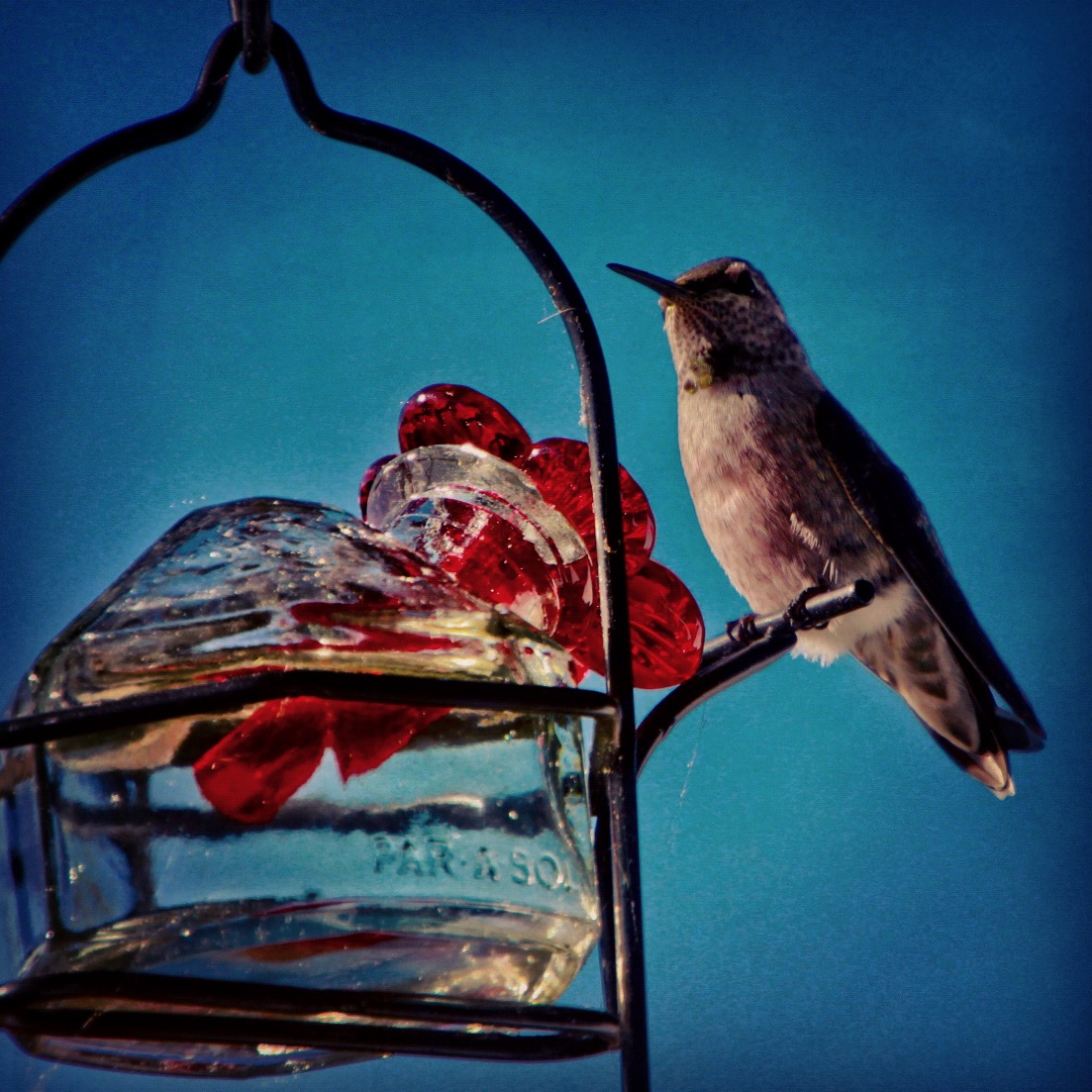
I am currently
sitting on my lovely porch, catching meaningful looks from the local
hummingbirds. Their feeder desperately needs a refill, and I think they’re
doing reconnaissance for an impending revolution. I also just narrowly escaped from a lounge of lizards dangling underneath my porch umbrella (apparently a
group of lizards is called a “lounge” . . . the things you learn!). It’s been a
few weeks since my trip back to Virginia, and I’m thankful for the quiet time I
have now to reflect upon everything I experienced while I was away. Each day of
my trip was lit up with reunions, lectures, dancing, weddings, and
more, and I find myself overwhelmed, in a good sense, with all I experienced. These events converged with one another in truly surprising and beautiful ways, and I’ll try
to capture at least some of that here.
I travelled back
to Williamsburg, VA on October 2nd to attend a variety of events. Monica
Potkay, who is in no small part responsible for my love of Chaucer, invited me to
lecture for the Medieval and Renaissance Studies department at William and Mary on a topic related
to my dissertation, and George Greenia — ever a source of support and
encouragement throughout my undergrad and graduate years — invited me to submit
a paper to the Annual Symposium for Pilgrimage Studies he was organizing. For the lecture, I chose one of my favorite
topics of late: the representation of Mongols in Middle English Romance. For
the conference paper, I decided to revisit my old flame Sir Isumbras, choosing to approach the romance from the angle of redemptive pilgrimage rather than that of crusade. Lecturing at my alma mater was at once
comfortable and surreal. I’d presented on this topic once before, and I knew
the College very well, but it felt strange to inhabit a new role in this place
all the same. I was deeply touched by the number of my professors who attended,
and I had at least a few moments where, as I looked out at the students, I
realized that I was in exactly their position only a handful of years ago, and
that I honestly didn’t feel that differently from how I did back then.
Admittedly, I can’t pull the all-nighters I used to (I've tended of late to
fall asleep like a cartoon character around 11pm), and I know a lot more stuff
than I did back then. I’ve also been through a tremendous amount — experiences both wonderful and tragic — that has certainly impacted how I see and respond to the world and those around me. And yet, as I stood up at the podium waiting to get started on the
talk, I realized that what hasn’t changed at all is my enthusiasm for what I
do. I had worried at various points throughout my years in graduate school that
I was choking what I loved to death (and sometimes I really think I was!), but
what hit me in that moment before the talk was that I still felt like a student
in a certain sense. I still felt the gravitational pull of all I had left to
discover, and that was why I was
excited enough to stand up in front of a group of (mostly) strangers and talk
about my findings for an hour. A
pleasant feeling, to say the least!
A tremendous
amount happened in between this lecture and the conference. My incomparable
sister-in-law got hitched to a truly great guy, and we all danced together
(many of us in pink dresses and feather boas) late into a gorgeous Fall evening
to the dulcet tones of Van Halen, Journey, and The Beatles. My good friend
Andrea and I crashed our undergrad advisor’s office hours with Cheese Shop
sandwiches (and beer) for a long-overdue reunion, and I also had the great
pleasure of reconnecting with a professor who had always encouraged my poetry
writing and whose children I’d babysat for a few of my undergrad years. I
hadn’t seen them since I graduated, but it felt in many ways as though we were
picking up where we left off – barring the fact that the son I babysat as a
little one is taller than me now (which, in fairness, isn't that hard to
accomplish, hobbit that I am). I made
sure to spend an evening training and having an incredibly meaningful conversation with my Sensei, who has been a constant source of wisdom and support for as long as I've known him.
I also met up
with someone I hadn’t seen since high school but who serendipitously came back
in to my life a few months ago; we’re facing a lot of the same challenges at
the moment in certain aspects of our lives, and being able to talk with her and
find an ally at this particular juncture was such a gift. Last but certainly not least, the long stay allowed me
to spend a lot of quality time with my parents and sister (my brother was still
deployed at the time, but I’m happy to report he is now home safe and sound!), and I even made a brief trip down to North Carolina to visit with my grandmother, who I hadn’t been able to see since my grandfather passed away this past summer.
Each of these
wonderful reunions reminded me of how important it is to stay connected with
those who matter in my life, and to always take the chance to reconnect with
those I’ve accidentally eluded over the years.
The work that brought me back to William and Mary was certainly
important, but the combination of work and “play” reminded me of what Eileen
Joy asked recently in her post on friendship: "What would it mean to imagine one’s career, one’s writing, as
a sort of devotion to another, to a beloved, whether mother, sister, lover, or
friend? Or even to a set of friends, those already met and those still unmet, a
kind of ceaseless love-as-talking?” In a way, my work on this trip pulled me
back to Virginia and allowed all of these wonderful reconnections to occur, and
I rather love the idea of imbricated work and friendship. Her challenge — that
we don’t necessarily need to separate work and life — really resonated with me
on this trip as a result.
The symposium I
attended was the first one ever held by the Pilgrimage Institute at the College
of William and Mary, and in many ways it aligned with this desire to balance
and comingle work with other aspects of ones life. Attendees and presenters came from a variety
of fields and vantage points. Some were academics. Others were dancers. Some
were art therapists. Others were documentary directors. Many were pilgrims. This vibrant mixture of
passions and careers imbued the symposium with an eclectic energy I’d never
quite experienced before at a conference.
The weekend kicked off with a rough-cut screening of “The Camino Documentary” directed and produced by Lydia B. Smith. The documentary focuses on Camino Frances,
and follows a diverse array of pilgrims who embark on a pilgrimage for equally varied reasons. Some travel in memory of a loved one who has passed, some for the
adventure and the challenge, some to find missing parts of themselves. I was
struck, however, by something that a monk said at the outset of the
documentary. He talked about how the external journey is important, but that
the internal journey one undertakes when on a pilgrimage is of equal if not
greater significance. This resonated strongly with what I was preparing to say
in my own presentation on virtual pilgrimage, and it was fascinating to see it
play out in the lives of the pilgrims on the screen. What truly impressed me,
however, was the fact that the documentary didn’t push any particular narrative
on the pilgrims. The ending was
cathartic, but it didn’t pretend that every person who journeyed on the Camino
was fundamentally altered. The changes, if there were any, were subtle and
allowed their privacy, something that I’d imagine can be hard to balance in the
making of a documentary film about personal journeys.
The following
day was one largely made up of presentations, and I was especially taken with the student exhibits on display between the major sessions. The undergraduate presenters had attended the Camino abroad trip this past
summer and had – as part of the requirements of the program – completed a
research project focused on a particular aspect of pilgrimage. Their research
interestes were diverse, creative, and deeply insightful, and it was thrilling to see so many intrepid undergraduates working hard on new and exciting projects. I had an especially serendipitous conversation with one of these students, Robin Crigler, who focused his project on aspects of playfulness and ritual on the Camino,
which reminded me yet again of the power of conjoined formality and informality
(it really seemed to be the running theme of this trip).
My own
presentation, which I’m providing at the end of this post, was a standard conference paper, but I decided to be a bit bolder in terms of what I
encompassed. I introduced my topic — Sir Isumbras’
use of pilgrimage imagery — by way of Google Earth, Petrarch, and German nuns,
and even though I worried initially that the combination made for nothing more
than insanity, it somehow all came together. Considering Isumbras from the angle of pilgrimage rather than crusade was hard
at first. I kept wanting to talk about its
crusading themes because that’s what I knew best. Forcing myself to stick with pilgrimage, however, allowed me to discover a whole array of new
possibilities in this text. I had honestly gotten
very tired of Sir Isumbras after
working on it in both the dissertation and in an article for Chaucer Review. Discovering something
new about the romance went a long way towards reigniting my enthusiasm for it, and it helped to reminded me of the value in taking diverse — and seemingly
contradictory — approaches when analyzing (dare I say journeying through?) a
text.
.jpg) |
| We drew on "shrinky-dink" paper, and then got to watch our creations warp and diminish in a toaster-oven. The point was to experience anxiety over the loss of our creation, only to realize that it was simply undergoing a transformation. Much like the experience of pilgrims on a journey . . . |
This theme
continued into the evening at the dance performance. Each of the dances
performed were powerful in their way, but I was especially struck by the
concluding act that, like the art therapy workshop, enacted a form of virtual
pilgrimage. The dancers journeyed across the stage, acting out their struggles
with the landscape and with the limitations of their bodies. They climbed. They
stumbled. They pressed on. They carried one another. They eventually made it to
Santiago. The choreography captured the arduousness and cathartic nature of
such journeys, and also served as a beautiful example of how powerful the
visual representation of such journeys can be. It also made me recognize an alternative
meaning of the phrase “to feel moved.” It occurred to me that when we say as
much, we’re actually suggesting transportation — that meaningful events,
moments, performances, etc., actually have the power to inspire powerful
virtual journeys of their own.
The final day
involved two diverse and fascinating plenaries — one on the shifting meanings
of pilgrim garb and the other on an ‘eco-evangelical’ pilgrimage along the Sao
Francisco River — and a concluding round-table meeting about the future of the
conference and the Institute. This kind of meeting was new to me as well, and
it was an absolute delight to attend. We all volunteered ideas and suggestions for
the financial plans of the Institute, and also raised suggestions for future
symposiums. By the end of the meeting, it seemed like we had an array of
exciting future plans in the works, and I cannot wait to see what the Institute
has to offer in the coming months and years. The energy and conviviality of this
weekend gathering was infectious, in no
small part because of how welcome people were to simultaneously analyze and personalize the
experience of pilgrimage. This conference quietly broke down the divides
between academic and non-academic modes (for lack of a better set of terms); both became equal and complementary partners in this setting. I
think that the topic of this conference — pilgrimage — invited this kind of
openness. It is impossible to completely separate the intellectual from the
personal when we talk about these kinds of journeys, since the experience of
pilgrimage is meant to be deeply subjective. This isn’t to say that all
conferences have to be this way, but I certainly hope that this one does, because it allowed for an array of striking
convergences to emerge in even the most unlikely of places.
As soon as the
meeting wrapped, I dashed over to Mama Steve’s (my family’s favorite place for
brunch) for one last get-together before I headed to the airport. While there,
I noticed — of all things — a person who looked suspiciously like Santa Claus
sitting at the table behind my mother. As I chatted with my parents,
I couldn’t help but notice him as he stood up (in a Christmas-themed aloha
shirt) and assembled a plate of homemade cookies from the contents of a cooler
he’d brought with him. He placed a holiday card for the waitresses next to the platter
and then left the restaurant as casually as an aloha-attired Santa possibly could. The waitresses seemed bemused, and for a few
seconds I worried that they were going to turn skeptical and toss the
cookies in the trash. To my delight, they did no such thing, but passed the
plate around to each other, laughing and enjoying a moment of mirth in an
otherwise hectic Sunday. The wonderful
absurdity of this scene seemed a fitting way to conclude this trip. A little
reminder, perhaps, to take the time to revel in moments of subtle hilarity — to be playful — in the midst of everything else around me.
I left for
California that evening with a truly full heart, and I’ve remained deeply
grateful for all of the renewed energy and enthusiasm I’ve been able to bring
back with me. I’ll close for now by
offering up my paper, and will look forward to sharing other ideas with you all
very soon. Cheers!
Sir Isumbras and the Virtual Pilgrimage
The term virtual is loaded with an array
of very modern implications. Select
Google Earth from a smart phone, for instance, and you can find yourself
transported to any far corner of the virtual globe, many of which can be viewed
in 3-d. Click on Skype, Facetime, or any number of other such programs and you
can have virtual face-to-face conversations with friends a half a world away.
The desire to bridge vast and uncrossable distances propels us towards the
world of the virtual, and I would hazard to guess that each of us can think of
at least one occasion (if not dozens) where that ability was deeply comforting.
This desire extends quite naturally into the world of pilgrimage, and a wide
array of cyberpilgrimages are available to a modern peregrinator. You can find
apps that allow pilgrims to virtually participate in pilgrimages to Lourdes, and I
even found one that allows you to trace your way through a variety of
labyrinths (a virtual pilgrimage twice over). In another example, the United
States Conference of Catholic Bishops created a Facebook app in 2011 that
allowed young people to virtually travel on pilgrimage to World Youth Day, and
nearly a thousand students participated in this way. Given that the entire
world can be accessed through mobile devices and computers, the development of
virtual pilgrimage in the modern world is hardly surprising. What might be
surprising, however, is that the medieval world was also one in which this kind
of nonstandard journeying was quite popular.
Some of the most striking examples
can be found in medieval convents. As Marie-Luise Ehrenschwendtner has
explored, the nuns at the convent of St. Katherine’s at Augsburg were, in 1487,
“awarded papal privilege by Innocent VIII . . . granting them all the
indulgences usually acquired through a pilgrimage to Rome and visits to the
seven pilgrim churches . . . To qualify they simply had to recite three
Paternosters and three Ave Marias at three different and specified localities
within the enclosure;” the nuns of Augsburg would go on, in 1499 to commission
Hans Holbein the Elder, Hans Burgkmair the elder, and another unnamed painter
to create paintings of the seven pilgrim churches of Rome for their convent (“Virtual
Pilgrimages,” 46). Kathryn M. Rudy has also tracked the appeal of virtual
pilgrimage in continental (mostly Dutch and German) convents, arguing that
since “nuns and religious women had little chance of visiting the Holy Land in
the flesh . . . [they] instead invented, developed, and revised existing
strategies for virtually visiting Jerusalem and the other holy places” (Virtual Pilgrimage in the Convent, 19).
In her work, she examines seventeen texts and an array of images and practices
used by enclosed nuns to inspire and actualize their virtual peregrinations.
Importantly, Rudy discovered through her work that for many of these women,
their pilgrimages were not metaphors but were “practice[s] to exercise as
physically as possible and as literally as possible: not just with the
imagination, but with the eyes, the hands, and the feet” (19).
These nuns frequently made use of
actual pilgrimage itineraries and travelogues in their creation of virtual
peregrinations, of which Francis Petrarch’s Itinerarium
ad Sepulchrum Domini is an example (as an aside, I came across no evidence to suggest that the nuns used Petrarch's Itinerarium specifically, but since it remains one of the more noteworthy examples of virtual pilgrimage, I felt bound to include it here). In 1358, Giovanni
Mandelli invited Petrarch on a pilgrimage to Jerusalem. Fears of either dying
or becoming ill at sea caused him to decline the offer, and Petrarch instead
composed, over the course of three days, an itinerary for his friend to take
with him on his journey. This work is often cited as an example of the
widespread phenomenon and practice of virtual pilgrimage to Jerusalem during
the later Middle Ages. As Theodore
Cachey observes in his marvelous edition of the Itinerarium, this work “asserts and celebrates the poet’s
capacity for overcoming the alienation of the journey and of space through
writing” (20). In fact, by emphasizing the lightness and ease of travel through
the writing process, Petrarch elevates virtual travel, advocating for its
legitimacy alongside more conventional means of pilgrimage. As Cachey observes, Petrarch does not
criticize pilgrimage or delegitimize it, but he does suggest the potential irrelevance
of physical location. As he says at one point, “In fact, that which makes me happy or
miserable is not to be found in any place but in the soul, and knowing that we
must die in some place, I do not know where is better” (Itinerarium, Pr. 3). Rather than travelling in the conventional
sense, Petrarch decides to go virtual: he announces his plans to “complete a
very long journey in a concise style” and frequently emphasizes the ease of his
journeying through maps and letters in this work.
These examples demonstrate the widespread appeal and popularity
(throughout a variety of cultural settings) of virtual pilgrimage. This form of
meditative travel, as scholars such as Suzanne Yeager have observed, were
considered as valid as actual peregrinations. Yeager, however, extends the
exploration of medieval virtual pilgrimage to vernacular literature as well,
and, in complement to her work, I’ve come to realize in my studies of medieval
literature that this legitimization of nonstandard travel affected the
representation of pilgrimage (martial or otherwise) in late Middle English literature.
For the sake of time today, I’ll only discuss a single, representative text – Sir Isumbras – but this romance stands
as particularly clear example of virtual pilgrimage in Middle English
literature. Through this text, and in complement to the examples above, we see
how its depiction of redemptive travel simultaneously validates actual and
virtual modes of pilgrimage. Virtual replications of such journeys, in the end,
emphasize the significance of the various destinations and highlight the palpable
desires to reach them, even if the means are seemingly unconventional. These
alternative modes of travel, in the end, reveal and important truth about
pilgrimage: that the journey and its potential to activate change, revelation,
and redemption in the traveller, is what actually matters. To quote from The Camino Documentary we saw last
night, virtual pilgrimage hones in on the fact that such journeys are “not about
arriving, [but are instead] about living.”
Isumbras was arguably one of the most popular vernacular
romances in Late Medieval England. It has no direct source, but appears inspired by the legend of St. Eustace, so much so that scholars have frequently
noted the romance’s occupation of a space in between hagiography and romance. The
romance’s hybridity, coupled with its widespread circulation (from Chichester
to the Scottish lowlands), and the fact that it survives in both secular and
devotional manuscripts, suggests that the romance may well have been read both
for entertainment value and for devotional purposes, a theory supported by Sir Isumbras' mimicry of the
devotional model of virtual pilgrimage in its plot and narrative structure.
Since the text is a fairly obscure one, I’ll provide a brief
summary. The romance begins with a description of the hero as a generous and
benevolent knight. One day while hunting, a divine messenger comes to him with a message
that God plans to punish him for his pride. The messenger gives Isumbras a
choice: to suffer now as a young man or later in his old age. Isumbras chooses
the former and immediately loses all worldly possessions: his horse drops dead,
his dogs go mad and run off into the forest, his livestock die, his house burns
down (all in a mater of seconds it seems). His wife and three sons survive, but
the family finds themselves destitute with hardly the cloths on their backs. Isumbras carves a cross into his shoulder
with a knife and announces that he and his family will go on pilgrimage to
Jerusalem. On the way, two of his sons are abducted (either by beasts or angels
depending on the version) and are presumed dead. At the Greek Sea, Isumbras,
his wife, and his remaining son are confronted by sea-faring Saracens who are
on their way to sack an unnamed kingdom in Christendom. The Sultan abducts
Isumbras' wife and makes her his bride, orders Isumbras to be brutally beaten,
and leaves him and his remaining son on the shoreline; the wife is sent to
Palestine to reside in the Sultan's palace while he and his men continue on
their way into Christian territory. Isumbras's remaining son is abducted in turn (again, either by a beast or an angel).
The hero makes his way to a town where he takes up
blacksmithing and, after seven years, forges his own armor. He battles as an
unknown in support of a Christian kingdom besieged by the aforementioned
sultan, and kills scores of Saracens, the Sultan included. The king of the
Christian kingdom asks Isumbras for his name, clearly wishing for him to join
his retinue. Isumbras refuses to divulge his identity and continues on his
pilgrimage. Once he reaches Jerusalem or Bethlehem (manuscript depending), an
angel visits him and announces that he has been absolved of his sins. Isumbras
soon hears of a beneficent queen (who is, in fact, his wife) and journeys to her
castle. They are happily reunited, and Isumbras is swiftly made king, having
rightfully inherited the territory through the death of the Sultan and his
wife's false marriage to him. Isumbras attempts to convert the inhabitants of his kingdom
but they refuse, and a force of roughly thirty thousand Saracens rises up
against him. On the day of battle, his wife announces that she will wear armor and die at his
side in battle, but, in the nick of time, the three sons arrive on the field (either guided by an angel
or riding on the beasts that had abducted them several years prior). The united family lays waste to
the entire Saracen army, and Isumbras and his sons go on to conquer other
territories.
In my previous work on Isumbras, I looked closely its representation of crusading (which is, at heart, a form of pilgrimage), and argued that the romance provides a streamlined and
deliberately idealistic version of successful religious conquest. Significantly, however,
the romance emphasizes the journey and the process of Isumbras’ salvation over
the establishment of global empire. The romance might end with a vision of
military victory, but Isumbras’ ability to win lands and prestige are predicated on his
moral redemption — on his pilgrimage. As such, despite the martial flourishes that pull Isumbras into the realm of crusades
romances, the text remains one deeply wedded to notions of virtual devotional
practice.
While it is true that Isumbras’ journey
to the Holy Land gradually takes the form of a crusade, the romance stresses that the
martial components of his pilgrimage are born out of necessity. All we are
given at the outset of the hero’s journey, for instance, is a clear sense of his need for
redemption and his desire to embark on a redemptive journey:
To his poor
children three
Who stood
before him naked, he said:
You shall do as I advise,
To seek God where he lived and died,
Who for us shed his blood.” . . .
With his knife he cut
A cross in his bare shoulder,
In stories as clerkes say. (Sir
Isumbras, 125-29;143-44)
The carving of the cross into his shoulder evokes (however brutally) the crossing
vows of crusader knights, but it remains the only hint of the battles that are
to come. And even when they do occur, it is clear that Christians are only
being forced to protect themselves. The sultan’s attacks of Christian lands,
and the Saracen uprising against Isumbras and his wife, require martial responses.
Initially, however, all we are presented with is the hero’s announcement that
he and his family must undertake a redemptive journey for the sake of his (and
even their) souls. While the battles may remain the more captivating moments of
the romance, the bulk of the story details Isumbras’ physical journey from
Europe to the Holy Land and his journey from sin to absolution. His ascension
to kingship and his martial victories, in other words, are only made possible
by his humbling pilgrimage.
The suffering endured by Isumbras and his family on their
way to the Holy Land dominates the initial stages of their journey. Their escalating misfortunes and its eventual
dissolution force the hero into complete submission to the will of God.
Initially stripped of all worldly possessions, Isumbras eventually finds
himself alone after wild beasts (or, in some versions, an angel) abduct his
children and a marauding sultan kidnaps his wife. Perceiving all of these
moments of abjection as part of God’s will (113-116; 205-6), Isumbras remains
faithful to his penitential quest, never despairing or growing angry in the
face of his suffering. His losses of status, of material goods, and of his
family force him to relinquish any sense of control over his identity. He
becomes, as a result, a penitent tabula rasa through which his salvation
and his earthy successes as a crusader are assured.
Even when Isumbras charges into his first battle against
Saracens, emphasis remains on his need for redemption and for the continuation
of his promised journey to Jerusalem. As Elizabeth Fowler has argued, he
“reforges his identity” by working as a blacksmith and creating a set of armor,
and eventually rides out in support of an unnamed Christian kingdom besieged by
the Sultan who had previously abducted his wife ("Lordship and the Saracens," 102). He dominates on the field,
killing scores of Saracens and even the Sultan himself. But when presented to
the grateful Christian king, he solemnly refuses to give his name. While this
refusal to identify himself resonates with the “Fair Unknown” tradition of
medieval romance, Isumbras’ insistence on anonymity allows for the
foregrounding of his pilgrim journey. Since he will only find redemption
through his completed pilgrimage to the Holy Land, and since any form of
recognition at this king’s court would imply vainglory and lead to distraction
and premature social elevation, the hero has no other choice but to remain
nameless and to depart in order to stay faithful to his redemptive journey. He
leaves quietly in the guise of a palmer, and, in so doing, reveals an
ability to contextualize his successes and failures as results of God’s will
rather than his own. He also demonstrates, through the adoption of anonymity,
his learned capacity to prefer spiritual devotion and the maintenance of his
soul to secular and social ambitions.
As I described earlier, Isumbras’ journey doesn’t end in
Jerusalem, but rather in a vague Levantine principality, and also on a note of
martial victory and crusade. Nevertheless, it’s important to note that this
romance doesn't reveal the beginning or the end point of Isumbras’
journey. We have no idea where he comes
from, and all we can say about where he ends up is that it lies somewhere in
the vicinity of the Holy Land. Geographic punctuations like the Greek Sea and
Jerusalem do exist, but not even they are stable — as I mentioned earlier,
versions of this romance place Isumbras’ redemption in either Jerusalem or Bethlehem. Additionally,
Acre (the last Latin kingdom to fall in 1291) is mentioned in the romance, but
only in certain versions. I have
previously seen these kinds of slippages as byproducts of the romance’s
circulation throughout a lengthy and volatile time period. As Lee Manion has
observed, for instance, Acre did not remain as strong a seat of desire as
Jerusalem, which may explain why so many later versions of the romance fail to
mention it. And while the naming of Jerusalem — at the outset of the romance
and as a site of Isumbras’ absolution — certainly participates in the
long-standing tradition of its status as Christendom’s ideological nexus, I
would offer that Isumbras’ journey, since it does not — cannot — end in the
Holy City, points not only to the desires of reclaiming Jerusalem in the late
Middle Ages but also to a deprioritization of destination over the journey
itself. The fact that the very
geographic locations in Isumbras are
negotiable, in other words, align with Petrarch’s observations about location
and its limitations.
This romance creates, from start to finish,
a streamlined virtual journey from Europe to the Holy Land, from a state of
pride and sin to a state of grace and redemption. Audiences of the tale are
actively invited, moreover, to insert themselves into the narrative. By
refraining from naming the exact location of Isumbras’ home or of his eventual
Levantine kingdom, those who encounter the story are given an opportunity to
create those locations for themselves. Isumbras and his journey have all the
more opportunity to become exemplary for the audience as a result. In a strange
way, the romance takes a narrative form that nearly replicates the structure of
the meditative labyrinth at Chartres. I’ve wandered along that labyrinth many
times, and have always found its replication of faith journeys to be
startlingly simple and revelatory: when you enter into it, you immediately come
very near to the center. You think that your journey will be an easy one, only
to find yourself rapidly swung out to the farthest edge of that center. This
process repeats itself over and over again until, at long last, you reach the
end of the journey. Unlike a maze, the labyrinth offers up no tricks or
false endings. There is only one,
inexorable conclusion to your wandering.
In a similar fashion, while Isumbras’ life — initially so calm and
peaceful (even complacent) — is rapidly destabilized, the journey he undertakes
inexorably leads him to a state of absolution, a spiritual prosperity mirrored
in his ascension to kingship and the reunion of his family. Like a wanderer in
the labyrinth, Isumbras is flung to the far edge of his faith, and has to
slowly find his way back to his center.
Along the way, he models the process of a penitent pilgrim for audiences
of the story, and offers opportunities for reflection on the tensions between
the earthly and spiritual priorities.
To return to a point made earlier, the fact that this romance circulated in both secular and devotional manuscripts suggests rather strongly that Isumbras was not only an entertaining story but was one that had actual devotional value. What my brief exploration of Isumbras’ narrative structure hopes to offer, in the end, is a glimpse into how a text long considered a less-than-artful vernacular romance successfully uses the structure of romance and of virtual pilgrimage as a conduit to devotion. By replicating a pilgrim’s journey, and by demonstrating how essential that journey is to a knight’s salvation, the romance invites audiences to virtually trace a similar route and reflect upon the lessons learned therein. Thank you.
To return to a point made earlier, the fact that this romance circulated in both secular and devotional manuscripts suggests rather strongly that Isumbras was not only an entertaining story but was one that had actual devotional value. What my brief exploration of Isumbras’ narrative structure hopes to offer, in the end, is a glimpse into how a text long considered a less-than-artful vernacular romance successfully uses the structure of romance and of virtual pilgrimage as a conduit to devotion. By replicating a pilgrim’s journey, and by demonstrating how essential that journey is to a knight’s salvation, the romance invites audiences to virtually trace a similar route and reflect upon the lessons learned therein. Thank you.
Bibliography:
Cachey, Theodore J. Petrarch’s Guide to the Holy Land: Itinerary to the Sepulcher of Our Lord Jesus Christ. Notre Dame: University of Notre Dame Press, 2002.
Ehrenschwendtner, Marie-Luise. “Virtual Pilgrimages? Encloser and the Practice of Piety at St Katherine’s Convent, Augsburg.” In The Journal of Ecclesiastical History (January 2009): 45-73.
Fowler, Elizabeth. “The Romance Hypothetical: Lordship and the Saracens in Sir Isumbras.” In The Spirit of Medieval English Popular Romance, edited by Ad Putter and Jane Gilbert, 97-121. Essex: Pearson Education, 2000.
Manion, Lee. “The Loss of the Holy Land and Sir Isumbras: Literary Contributions to Fourteenth-Century Crusade Discourse.” Speculum 85 (2010): 65-90.
Rudy, Katherine M. Virtual Pilgrimage in the Convent: Imagining Jerusalem in the Late Middle Ages. Turnhout: Brepols, 2011.
Yeager, Suzanne. Jerusalem in Medieval Narrative. Cambridge: Cambridge University Press, 2008.